Transitioning To The National E-Invoicing System

E-invoicing plays a pivotal role in Jordan now as a result of digital transformation happening around the globe and region. This in turn served in favor of tax reform, achieving financial transparency, and ensuring tax fairness. A significant stride in implementing a comprehensive E-invoicing system aimed at improving tax collection, combating tax evasion, and facilitating business transactions.
This is all organized by the Income and Sales Tax Department (ISTD) under what is now known as the National E-Invoicing System. In this context, the future of E-invoices in Jordan extends beyond digitization and automation, offering additional benefits that foster greater collaboration across various commercial sectors.
The National E-invoicing System: A Comprehensive Platform for Organizing E-Invoices in Jordan

The ISTD launched the National E-Invoicing System on December 8, 2022, as the official platform for managing all local sales and purchase invoices electronically while adhering to E-invoice criteria published by the ISTD. This system is not restricted to large enterprises only; it includes other sectors including SMEs and freelance professions; making it accessible to everyone at zero cost as The National E-invoicing System is free of charge.
What is E-Invoicing in A Brief?
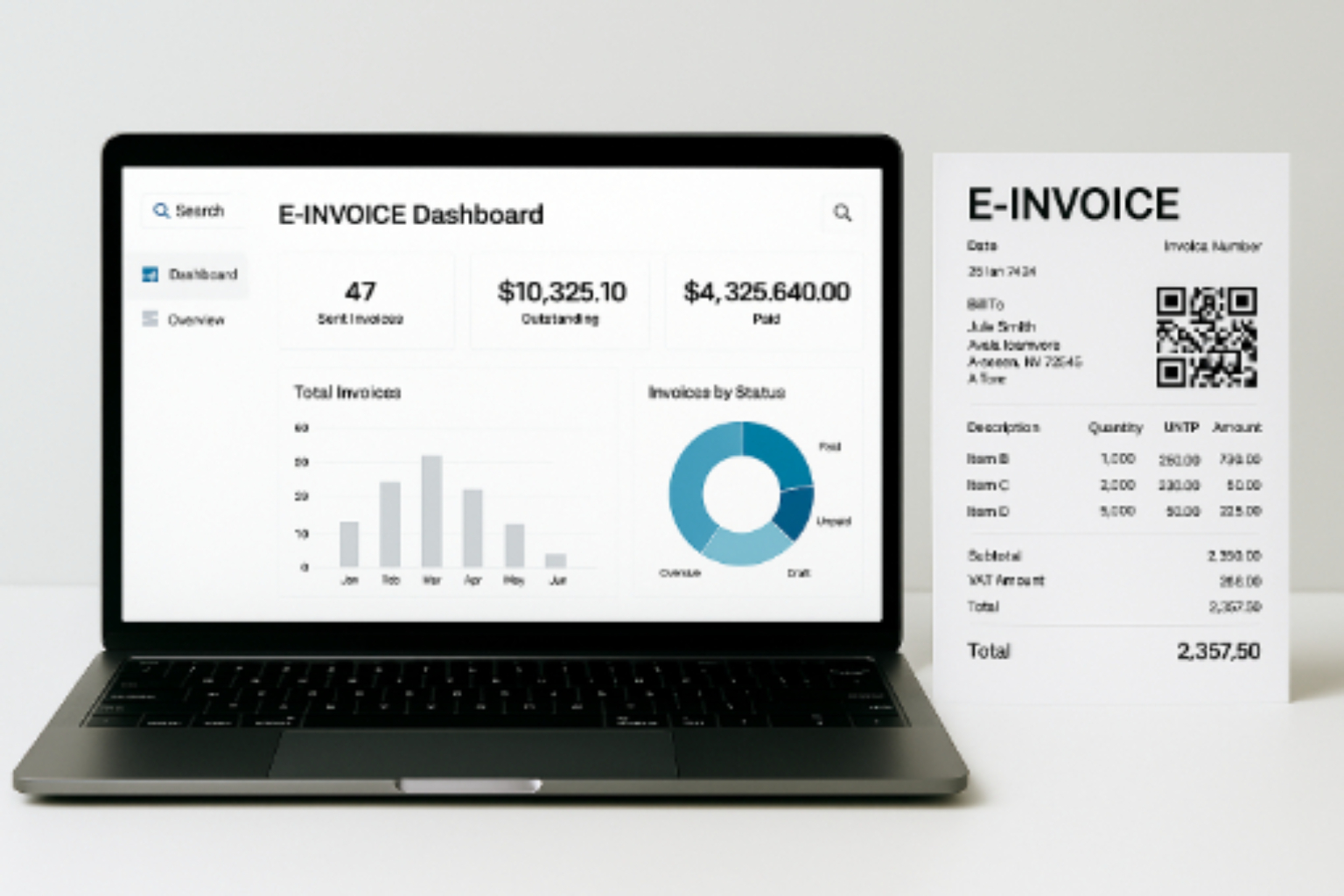
E-invoicing refers to the issuance, sending, and receiving of invoices electronically through an E-invoicing system, replacing paper-based or non-compliant digital formats like PDFs. The system securely and instantly processes the E-invoice data, reduces human errors, and fosters better control within organizations.
This represents a major shift from traditional invoices, as each E-invoice is integrated directly with the ISTD, enhancing transparency and trust between consumers and suppliers. It also supports the ISTD’s call for compliant parties to only deal with other compliant parties.
Key Benefits of Transitioning to E-Invoices
1. Enhanced Tax Compliance
The E-invoicing system helps reduce tax evasion by instantly recording all sales and purchase transactions, ensuring accurate collection of due taxes and payments.
2. Reduced Operational Costs
Eliminating paper, printing, and manual storage significantly lowers administrative cost, this is especially beneficial for SMEs.
3. Faster Accounting and Auditing Processes
Immediate access to E-invoices facilitates auditing, saving time and effort in data analysis and retrieval.
4. Environmental Protection
Reducing reliance on paper invoices contributes to environmental sustainability by minimizing paper and ink consumption.
5. Performance Analytics and Reporting
E-invoicing systems provide advanced tools for generating accurate performance reports and analytics, helping companies track sales, expenses, and taxes to make better financial and managerial decisions.
What Challenges May Arise in the Transition to E-Invoicing?
Businesses in Jordan are undergoing a significant transition toward E-invoices. This requires them to adapt to new systems and upgrade their digital infrastructure. Despite varying levels of technical readiness especially among small businesses and freelancers, an E-invoicing system remains a promising opportunity to improve efficiency and tax compliance. In this regard, these sectors can benefit from E-invoicing solution providers such as InvoiceQ.
The Role of E-Invoicing Companies
Tech-companies play a crucial role in supporting the E-invoicing infrastructure. InvoiceQ stands out as a specialized E-invoicing platform that offers innovative solutions to send and receive ISTD compliant invoices. The platform enables companies to connect directly with the National E-Invoicing System and serves as a dynamic, user-friendly solution for businesses looking to meet tax legislation in Jordan.

Thanks to InvoiceQ’s simple user interface, users get to manage E-invoices and integrate seamlessly with The National E-invoicing System without technical complications. Additionally, companies can integrate their accounting or financial systems without having to replace or change them. This offers flexible and easy-to-implement compliance options, streamlining the digital transformation process.
What Does The Future Hold for E-Invoicing in Jordan?

Jordan is steadily progressing towards the digitization of its tax system, thus, E-invoicing has been made mandatory now. This transformation fosters a more transparent and competitive business environment, improves tax collection efficiency without imposing additional burdens on taxpayers, and strengthens the country’s digital infrastructure. As user awareness continues to rise, the outlook for E-invoicing in Jordan is increasingly bright, promising substantial changes in financial and tax administration practices.